
Dental Articles - Oakville
The Silent Timeline of Tooth Decay: From Plaque to Periodontitis
Posted by SmileVille Dentistry on Tue, 21 Apr 2026
Stop the domino effect of dental neglect. Explore the silent timeline of tooth decay from plaque to periodontitis, and learn how preventative care at in protects your smile and your wallet.
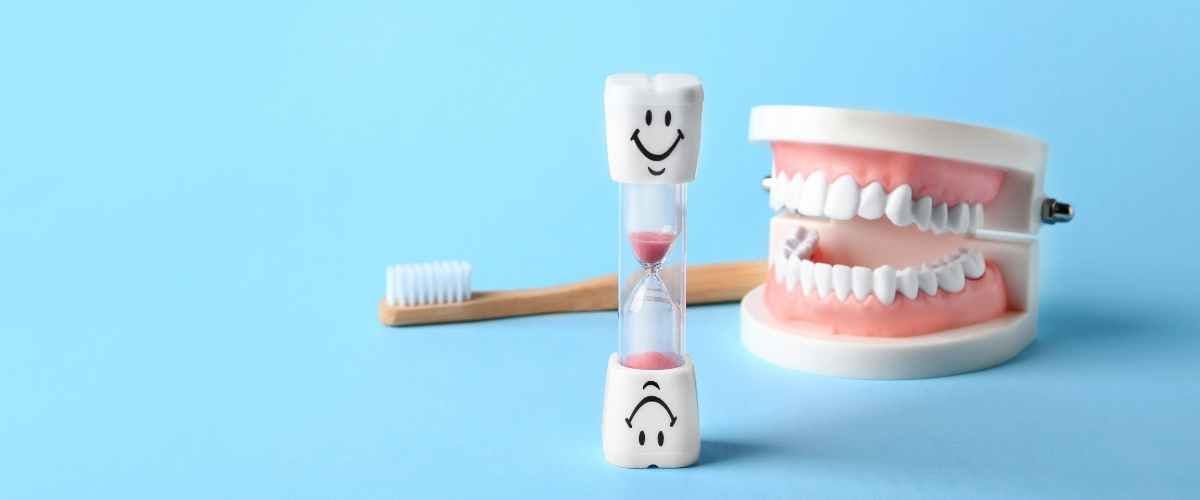
We often treat dental cleanings like an optional oil change for our mouths, something to get around to when the schedule clears up or a "check engine" light finally starts blinking. Many see it as a cosmetic "spa day" to get that fresh, polished feeling.
In reality, a dental cleaning is a critical preventative medical procedure. The "if it doesn't hurt, it's fine" mentality is a dangerous gamble. While you are busy with life, a silent biological timeline is unfolding in your mouth. Skipping that chair does not just lead to yellow teeth; it triggers a domino effect that can impact your entire body.
The Immediate Impact (0–6 Months): The Quiet Buildup
Plaque Buildup
Plaque is a soft, sticky biofilm made up of bacteria, food particles, and saliva. While brushing and flossing help remove much of it, toothbrush bristles simply cannot reach every nook and cranny, especially between teeth and along the gumline. Over time, missed areas become safe havens for bacteria.
The "Fuzzy" Feeling
Have you ever noticed that slightly rough or fuzzy feeling on your teeth at the end of the day? That is plaque accumulation. Even after brushing, some of it can linger in hard-to-reach spots. It is subtle, but it is the first step in a much bigger process.
Halitosis (Bad Breath)
As bacteria multiply, they produce sulfur compounds that cause unpleasant odors. Persistent bad breath is often one of the earliest signs that plaque buildup is getting out of control. At this stage, the damage is still minor, but the clock has started ticking.
The Danger Zone (6–12 Months): When Plaque Turns to Stone
This is where the damage stops being "washable." If plaque is not removed by a professional, it undergoes a chemical change.
- Calcification: Plaque absorbs minerals from your saliva and hardens into tartar (calculus). Once it reaches this "cement-like" state, no amount of scrubbing at home can remove it. Only a professional dental scaler can break it loose.
- Gingivitis: This is your body's early warning system. Your gums may become red, swollen, or bleed when you floss.
The Point of No Return (1–2+ Years): When Infection Moves Deeper
Without treatment, gingivitis can progress into a much more serious condition: periodontitis.
Periodontitis (Gum Disease)
At this stage, infection spreads below the gumline, attacking the bone and connective fibers that hold your teeth in place. This is no longer just a surface problem; it is structural damage.
Recession and Pocket Formation
As the infection progresses, gums begin pulling away from the teeth and small spaces called periodontal pockets form. These pockets trap bacteria and debris, making cleaning difficult even at home. The deeper the pockets, the harder it becomes to stop the infection.
Tooth Decay (Cavities)
Meanwhile, tartar acts like a protective shield for bacteria. Acid-producing microbes thrive beneath it, slowly breaking down enamel and creating cavities. At this stage, fillings, crowns, or root canals may become necessary. The longer treatment is delayed, the more complex and expensive it becomes.
The "Big Picture" Consequences
Long-term dental neglect is not just a "mouth problem." It is a systemic health crisis.
- Tooth Loss: Chronic infection eventually leads to mobility. Without the bone to support them, teeth become loose and may eventually fall out or require surgical extraction.
- The Body Connection: Research has shown a significant link between oral inflammation and serious conditions like heart disease, stroke, diabetes complications, and respiratory issues.
- The Financial Toll: A standard preventative cleaning usually costs around $150. Compare that to a $1,500 root canal or a $3,000 dental implant once a tooth is lost. Neglect is an expensive habit.
What to Expect When You Finally Go Back
If it has been years, the fear of judgment is often worse than the fear of the drill.
No Judgment Zone: Dental professionals are like mechanics; they have seen the worst-case scenarios and their goal is simply to get you back on the road.
Deep Cleaning: If there is significant buildup, you may need "Scaling and Root Planing" to remove tartar from deep gum pockets.
The Recovery: Once the "bridge" of tartar is removed, your gums can finally breathe and begin the healing process.
Your teeth are the only part of your body that cannot heal themselves.
Prevention is infinitely easier, cheaper, and less painful than a cure. Do not wait for the pain to tell you something is wrong. Call your dentist today and get back on track.
Dentist Oakville
